

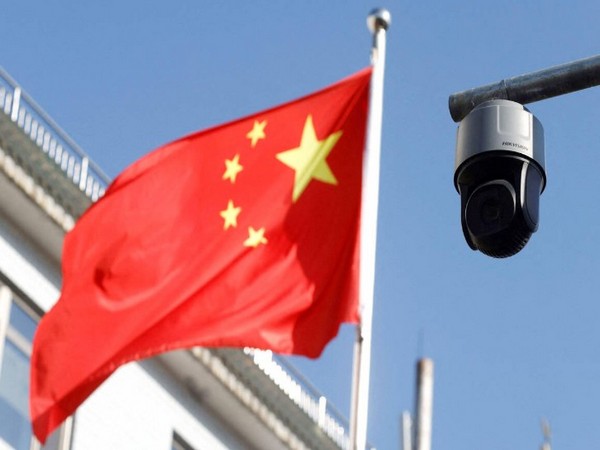
Beijing [China], January 1 (ANI): China’s economy is facing a slowdown, with growth dropping from 6.5 per cent before the pandemic to just 4.6 per cent now, and there are concerns that even that number is seriously overstated. As the economy continues to stagnate, living standards remain far below those of developed nations, further highlighting the nation’s economic struggles, Asia Times reported.
One key issue contributing to this downturn is the country’s declining total factor productivity (TFP), a measure of how efficiently inputs like labour and capital are used to generate output. While the official data points to a fall in TFP over the past decade and a half, this claim remains debated. Regardless, there’s widespread agreement that productivity growth has slowed significantly compared to earlier years.
Economist Paul Krugman has pointed to a shift toward real estate as a key factor for the slowdown. After the 2008 global financial crisis, China began pouring resources into the real estate sector, a low-productivity industry, which slowed overall productivity. Moreover, a 2022 analysis highlighted broader structural issues in China’s economy, including inefficiencies in capital allocation and an overreliance on a growth model driven by resource extraction. These systemic challenges, already present before the pandemic, have been worsened by the fallout from trade tensions, COVID-19 disruptions, and aggressive industrial policies implemented by the Chinese government.
In hindsight, earlier assessments of China’s economic prospects appear overly optimistic. Arthur Kroeber’s 2016 book China’s Economy: What Everyone Needs to Know® envisioned China successfully transitioning from a resource-driven model to one powered by productivity and technological innovation. However, in the years since, this optimism has waned as the country has struggled to maintain the productivity growth needed for sustained prosperity. Kroeber acknowledged that China faced economic challenges, but his hopes for a shift to efficiency-driven growth seem less achievable today. Despite the value of Kroeber’s insights into fiscal federalism, urbanisation, and real estate, his optimism about China’s future no longer aligns with the reality of the country’s economic trajectory.
One key reason for the slowdown is that China is reaching the limits of its growth potential. While countries like Japan, South Korea, and Taiwan successfully transitioned to high-income economies by focusing on technological advancements and productivity, China’s growth has slowed in a similar manner to other middle-income countries like Thailand. Since 2011, TFP in China has been in decline, with some reports even showing negative growth. As China approaches the technological frontier, acquiring advanced technologies has become more challenging, as companies around the world guard their innovations more tightly.
China’s demographics are another factor contributing to the productivity slowdown. For years, China benefited from a “demographic dividend,” a large, young workforce with relatively few dependents. However, that advantage has started to diminish as the country’s working-age population began to decline around 2010. Studies have shown that aging populations tend to correlate with lower productivity growth, and China is no exception. With fewer workers entering the labour force and an aging population, the economy faces a significant challenge in maintaining productivity levels.
Urbanisation, which has historically boosted China’s productivity by moving workers from low-productivity agricultural jobs to higher-productivity urban manufacturing roles, is also losing steam. While urbanisation helped China achieve rapid economic growth for decades, experts point to 2010 as the “Lewis turning point,” when the surplus labour in agriculture began to dwindle. Additionally, China’s hukou system, which restricts internal migration, has further limited the benefits of urbanisation. These demographic and structural changes have led to a deceleration of productivity growth, and the tailwinds of technology adoption, urbanisation, and demographic growth are no longer strong enough to propel the economy forward at the same pace.
Another significant challenge facing China’s productivity is its research and development (R&D) sector. While China has increased its focus on R&D in recent years, studies have found that state-owned enterprises (SOEs) typically show much lower R&D productivity than private or foreign-owned companies. Research by Konig et al. (2021) suggests that although R&D investments have contributed to productivity growth, the impact has been modest due to issues like resource misallocation and the misclassification of expenses as “R&D.” Moreover, while China has expanded its university research sector and increased its research expenditures, there are concerns about the quality of Chinese academic research and its global leadership. Plagiarism, data falsification, and nepotism have been reported in the country’s scientific community, undermining the effectiveness of research and contributing to its lower productivity.
China’s export market is also facing constraints, which have affected the country’s productivity. Economic theories suggest that global competition fosters innovation, driving productivity through “export discipline.” However, since the 2008 financial crisis, demand for Chinese goods has slowed, compounded by trade wars and market saturation. While exports to the European Union have increased, they haven’t made up for declines in other markets. Additionally, China’s exports to developing nations have risen, but these countries have much lower purchasing power. As a result, China’s share of global exports has been shrinking, reducing the benefits of export-driven growth. This shift from an export-led model to a focus on domestic investment presents challenges to the country’s long-term productivity growth, reported Asia Times.
China’s low consumption rates also play a role in its productivity challenges. Unlike the U.S., where consumption drives economic activity, China’s economy remains heavily investment-focused. Household consumption in China accounts for just 39 per cent of GDP, compared to over 80 per cent in the U.S. As a result, there is less incentive for companies to innovate and differentiate their products. This low consumer demand makes it harder for China to develop high-quality, innovative products that can drive productivity growth. Furthermore, China’s policies have generally favoured investment over consumption, which has inadvertently slowed productivity.
The country’s approach to managing economic stability has also hindered productivity. From 2008 to 2016, China used substantial state-controlled bank lending to prevent recessions, especially in the real estate sector. While this strategy helped maintain economic stability, it also entrenched low-productivity industries, such as real estate and state-owned enterprises. The rapid disbursement of funds during this period led to inefficient projects and a reliance on sectors with limited productivity growth. These measures, although effective in staving off recessions, have left China’s economy highly dependent on industries with low productivity growth.
In an attempt to address these challenges, President Xi Jinping has introduced initiatives like Made in China 2025, which aims to enhance the domestic semiconductor industry and reduce China’s reliance on foreign technology. However, whether these strategies will successfully reverse the productivity slowdown remains uncertain. Over the last three years, Xi has taken a more aggressive approach by targeting industries he views as unfavourable, such as consumer internet, finance, video games, entertainment, and real estate. His efforts are aimed at redirecting resources–such as talent and capital–toward industries that he sees as more aligned with China’s long-term economic goals.
Xi’s strategy marks a departure from traditional industrial policies, which typically focus on supporting successful sectors. Instead, he is attempting to dismantle industries he views as detrimental to the country’s future. For instance, companies like Alibaba, Tencent, and Baidu, which were once seen as the backbone of China’s innovation, are now under scrutiny, Asia Times reported.
This shift has raised concerns about the impact of such policies on entrepreneurship. Entrepreneurs may be reluctant to start new ventures if the government can suddenly change its priorities or seize successful companies, creating an atmosphere of uncertainty and risk. While shifting resources toward preferred sectors might initially succeed in redirecting talent, the long-term effects on innovation and entrepreneurship remain unclear.
China’s efforts to overcome its productivity challenges face significant hurdles. While the government continues to implement policies aimed at boosting certain sectors, the broader structural issues, including demographic shifts, inefficiencies in R&D, and declining export demand, persist. Whether Xi Jinping’s industrial policies can effectively address these challenges and restore China’s productivity growth remains an open question, with many experts expressing scepticism about the country’s ability to break free from its current economic stagnation. (ANI)
Disclaimer: This story is auto-generated from a syndicated feed of ANI; only the image & headline may have been reworked by News Services Division of World News Network Inc Ltd and Palghar News and Pune News and World News

HINDI, MARATHI, GUJARATI, TAMIL, TELUGU, BENGALI, KANNADA, ORIYA, PUNJABI, URDU, MALAYALAM
For more details and packages